6 Best Ways To Create a Home Office on a Budget
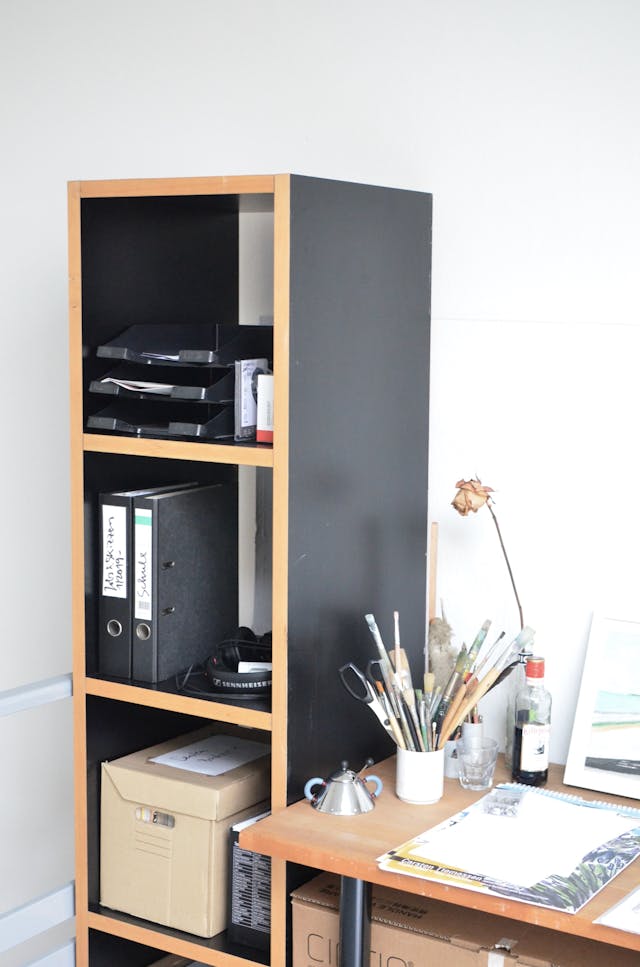
Working from home sounds easy until you realize there’s no space that feels like a home office.
You’re either sitting on the bed with your laptop sliding off, or sharing the dining table with everyone’s things. You want a space that keeps you focused but you also don’t want to spend a fortune.
So let’s build that, not Pinterest-perfect, but real-life perfect
Before you buy anything, pause.
Ask: Why do I need this space?
Most people create a home office for one of these reasons:
You work remotely and need a quiet, focused area.
You study, plan, or manage side projects and need order.
You’re running a small business from home and need a setup that looks professional for clients or video calls.
When you know your purpose, your design decisions become smart and simple, not random.
For example, a student needs more storage for papers; a freelancer needs better lighting for calls; a business owner needs a background that looks neat on camera.
You don’t need a separate room, and most people don’t have one.
Here are realistic spaces you can turn into a home office:
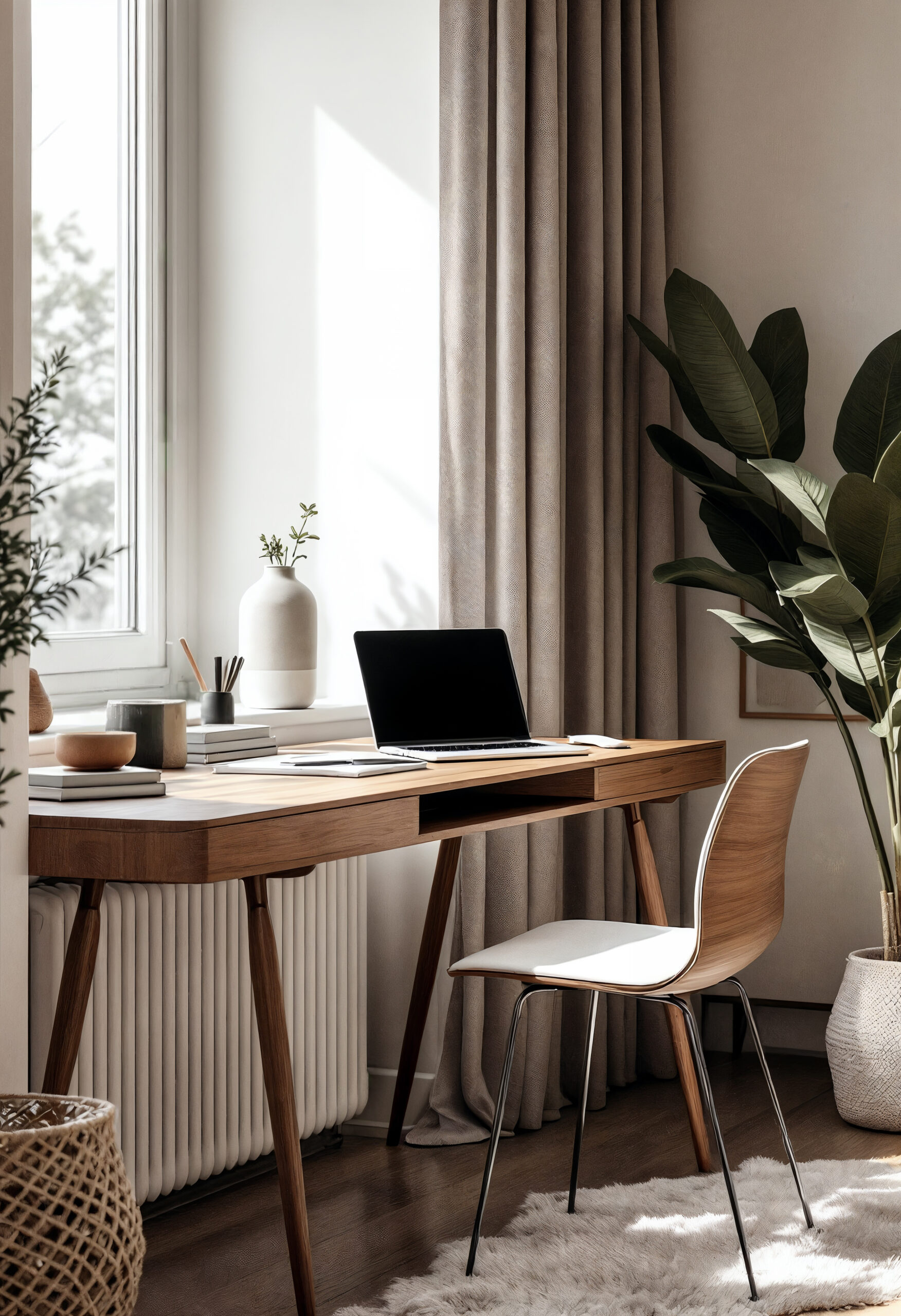
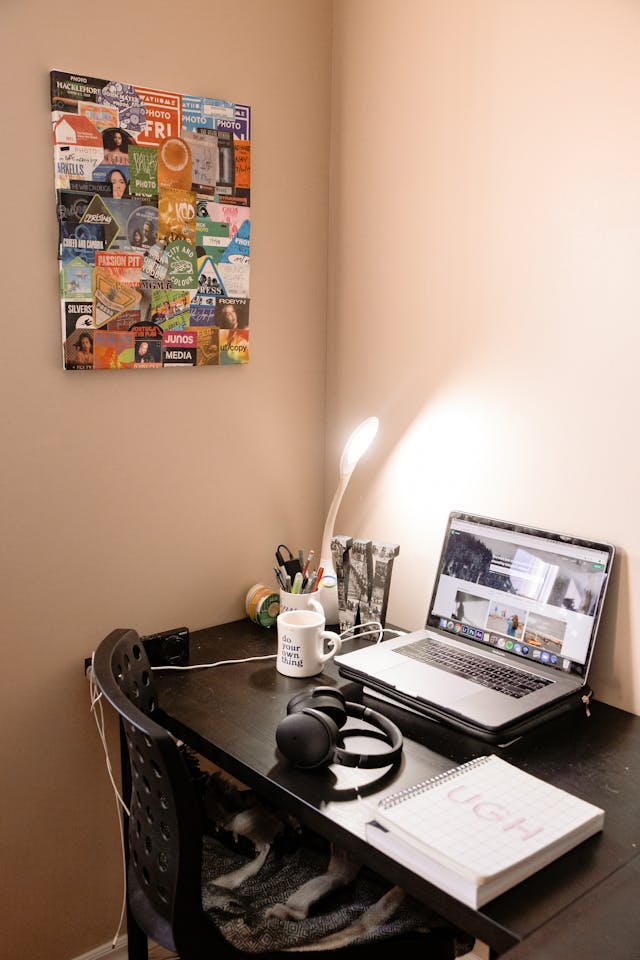
A bedroom corner: Works if you want quiet and privacy.
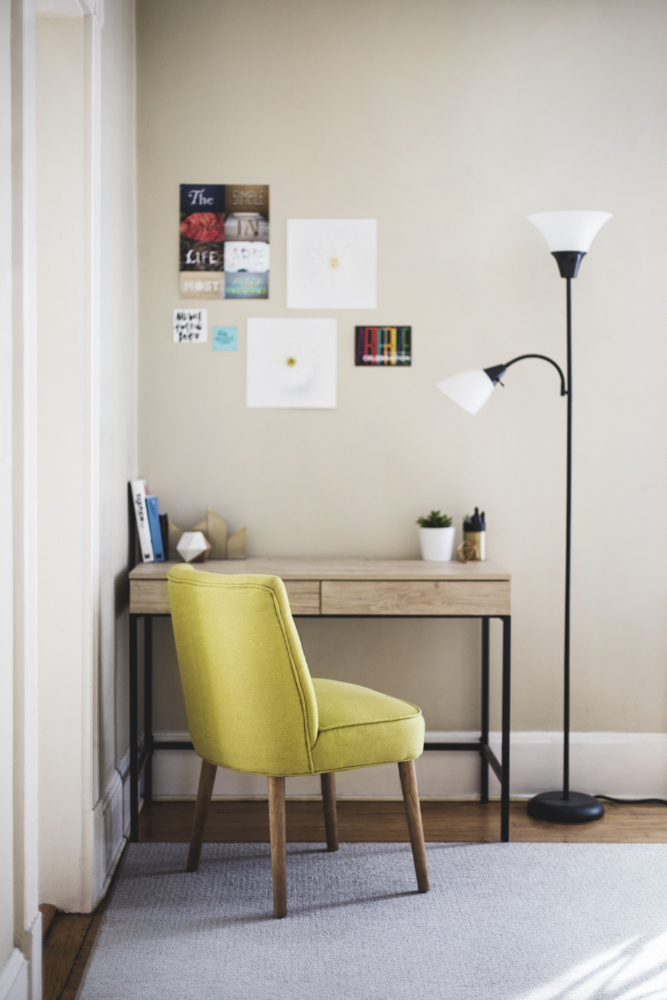
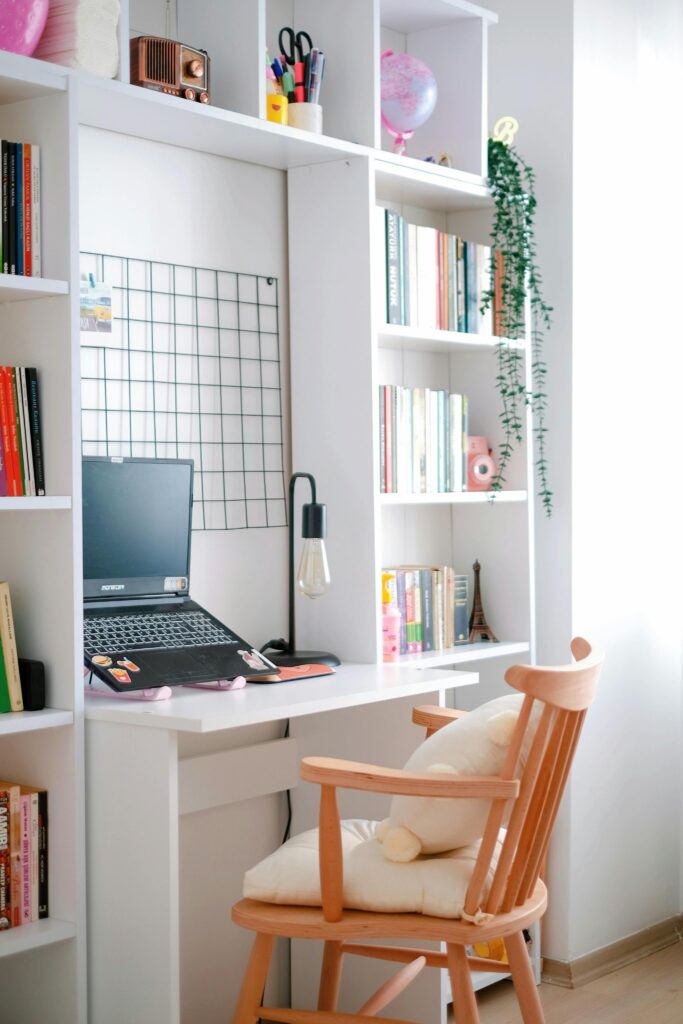
An empty wall: Great for minimal setups, just a table, chair, and shelves.
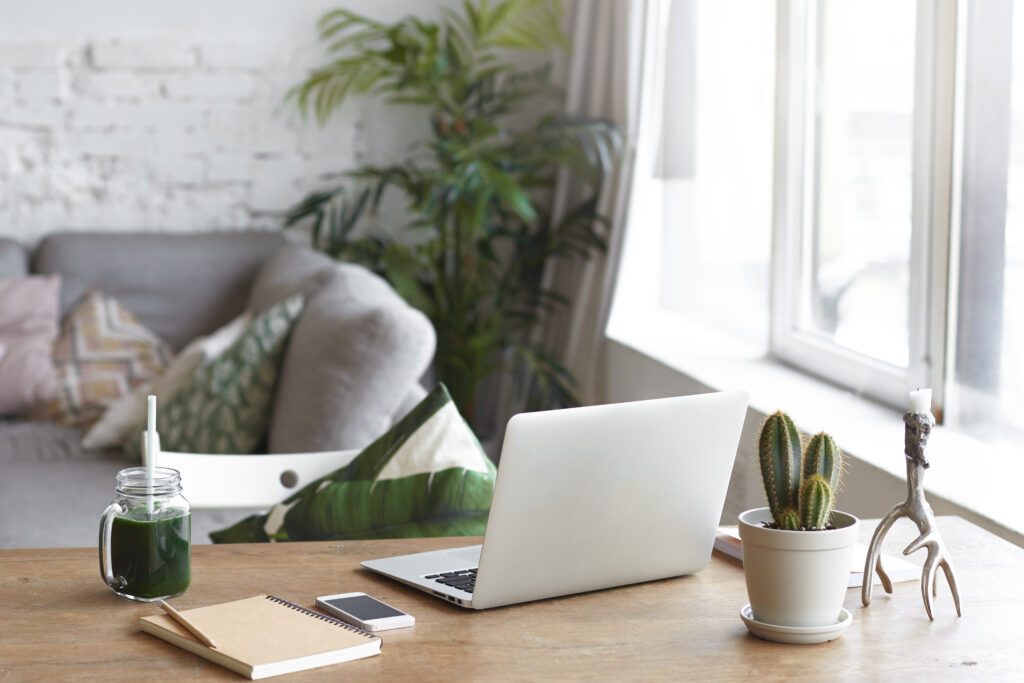
Living room corner: Add a small divider or curtain for separation.
Under a staircase: Use that wasted spot for a compact desk and storage.
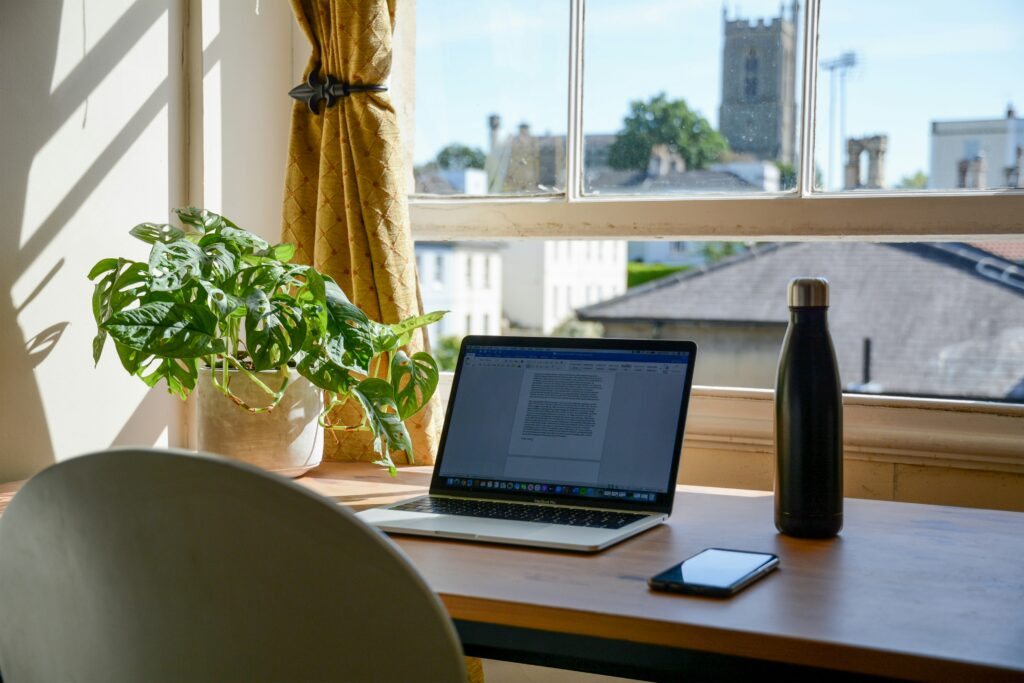
A window area: Best for natural light and focus.
Your space doesn’t define your potential, but your setup does.
This is where most people waste money, buying random cute decor before understanding needs.
Instead, ask three questions:
What do I really use daily? (Laptop, notebooks, lamp, one plant maybe.)
What clutters my space? (Cables, papers, extra stationery.)
How much time will I spend here? (That decides comfort level of chair, lighting, etc.)
Make your plan around usefulness first, looks second.
Desk: Pick something that fits your routine, not your Pinterest board. If you mostly use a laptop, a compact table works. If you write or draw, choose wider.
Tip: Check thrift shops or Facebook Marketplace; you’ll find solid pieces at half price.
Chair: Don’t buy a big gaming chair for a small space. A sturdy, cushioned dining chair with good back support works fine.
Storage: Go vertical. Wall shelves or pegboards free your desk. Even small baskets can organize cables and notebooks.
Decor doesn’t mean filling every corner. It means choosing one or two things that make your space feel yours.
One plant: Good for calm and air freshness.
One quote or photo frame: Something that reminds you why you’re working.
One scent or candle: Optional, but helps with focus and mood.
That’s it. Decorate with a purpose, not clutter.
A small office can start feeling suffocating quickly.
At the end of each day, take two minutes to reset:
Clear the desk,
Push the chair in,
Close the notebook,
Put away cables.
It’s simple, but it makes your next day start clean — mentally and visually.
You don’t need expensive furniture or a new room to build a home office — you just need clarity.
Start with what you have. Use less. Think smarter.
Because a space that works for you isn’t the one that looks perfect — it’s the one that helps you show up every day.
Which of these small-space ideas would work best for your home? Share your thoughts in the comments. I’d love to hear how you’ve set up your workspace.
Decorating your middle-class bedroom doesn’t have to be expensive, especially if you’re living in a middle-class Pakistani home. With just Rs 10,000, you can give your room a fresh, cozy, and stylish look. In this post, I’ll walk you through a simple step-by-step plan to upgrade your bedroom using affordable, good-quality items you can easily…
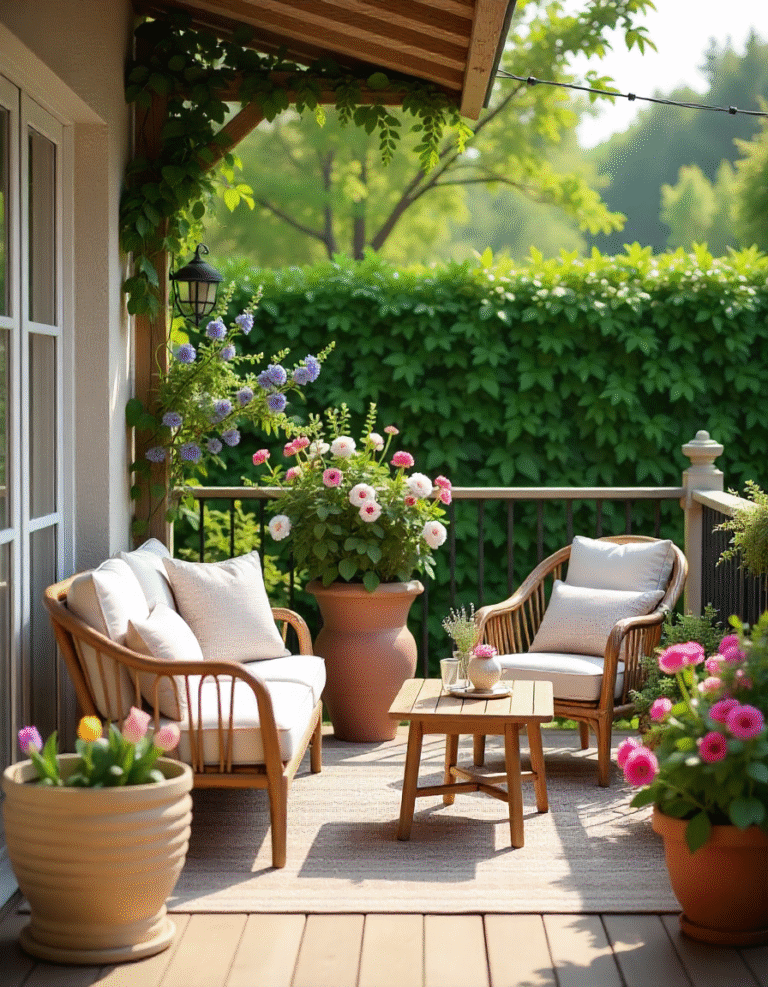
Looking to add color and charm to your outdoor space without the stress of constant upkeep? Artificial flowers might be your best friend. Whether you have a cozy balcony, a sunlit porch, or just a few empty garden pots—faux florals can bring life, color, and peace with zero maintenance. This guide will help you style…
Wallpaper has made a big comeback, but this time it’s not about overwhelming florals or outdated patterns. Today’s wallpaper designs are chic, versatile, and surprisingly practical. Whether you want to add subtle texture or make a bold statement, there’s a wallpaper idea for every style. Here are 10 fresh ways to bring your walls to…
Having a cabinet-free kitchen can feel cluttered and stressful. You have pots stacked in odd corners, dishes piling up on the counter, and no idea where to store your dry goods. It’s a daily struggle but it doesn’t have to stay that way. Below you’ll find some smart and practical ideas that will help you…
Hey, if you are a beginner and want to paint furniture professionally, you have reached the right place. Here you will see how to paint furniture easily without going into too deep details (that will prevent you taking from taking first step) or spending much on supplies. Let’s Start 1. Gathering Supplies Gather all your…